Autism Treatment in Jaipur: How BSM Neuro Rehab Helps Children
Every child with autism has a different way of communicating, learning, interacting and responding to the world around them. Some children may have difficulty expressing their needs, while others may experience challenges with social interaction, sensory processing, attention or everyday activities.
For families looking for Autism Treatment in Jaipur, early assessment and individualized intervention can help identify a child’s strengths, challenges and areas where additional support may be beneficial.
At BSM Neuro Rehab, Murlipura, Jaipur, the focus is on supporting the child’s development through individualized rehabilitation and therapy rather than following the same programme for every child.
Understanding Autism Treatment in Jaipur Spectrum Disorder
Autism Spectrum Disorder (ASD) is a neurodevelopmental condition. It can influence communication, social interaction, behaviour, sensory processing and learning in different ways.
The word spectrum is important because autism does not look the same in every child. One child may communicate verbally but struggle with social interaction, while another may require considerable support with communication and daily activities.
This is why autism intervention should begin with understanding the individual child, not simply the diagnosis.
How BSM Neuro Rehab Helps Children with Autism
At BSM Neuro Rehab, autism support can involve different rehabilitation and developmental services depending on the child’s assessment and needs.
The objective is not to change who the child is. Instead, therapy focuses on developing useful skills, supporting communication and participation, and helping the child become more independent in everyday activities where possible.
- Communication and language development
- Social and interaction skills
- Sensory and motor skills
- Attention and participation
- Functional movement
- Learning and developmental skills
- Activities of daily living
- Parent and caregiver guidance
The findings help determine appropriate rehabilitation goals and exercises.
Speech Therapy for Communication Development
Communication difficulties are common among children with autism, although their nature and severity vary.
Some children may have delayed speech, difficulty expressing their needs or challenges understanding and using language in social situations.
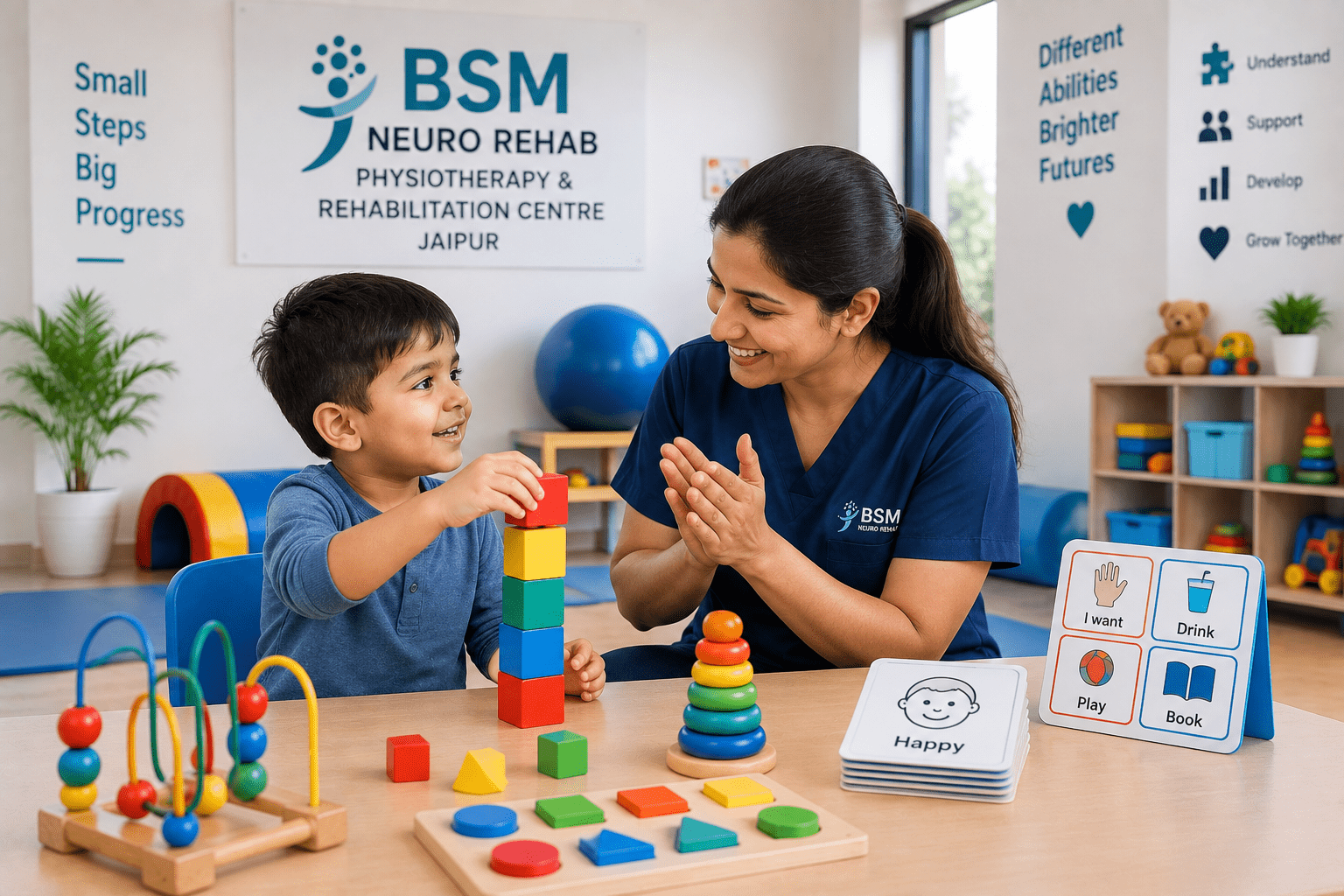
Speech therapy for autism may work on functional communication, language development, speech clarity and interaction according to the child’s needs.
For some children, communication support may also include gestures, visual strategies or augmentative and alternative communication approaches when appropriate.
Occupational Therapy and Sensory Support
Some children with autism experience sensory differences that affect how they respond to sounds, touch, movement, textures or their surroundings.
Occupational therapy can support participation in everyday activities and work on areas such as fine motor abilities, self-care, play and functional skills.
Intervention should be based on the child’s individual occupational and sensory needs rather than assuming that every autistic child requires the same sensory programme.
Physiotherapy and Motor Development
Autism is primarily a neurodevelopmental condition, but some children may also experience difficulties with balance, coordination, posture, strength or gross motor development.
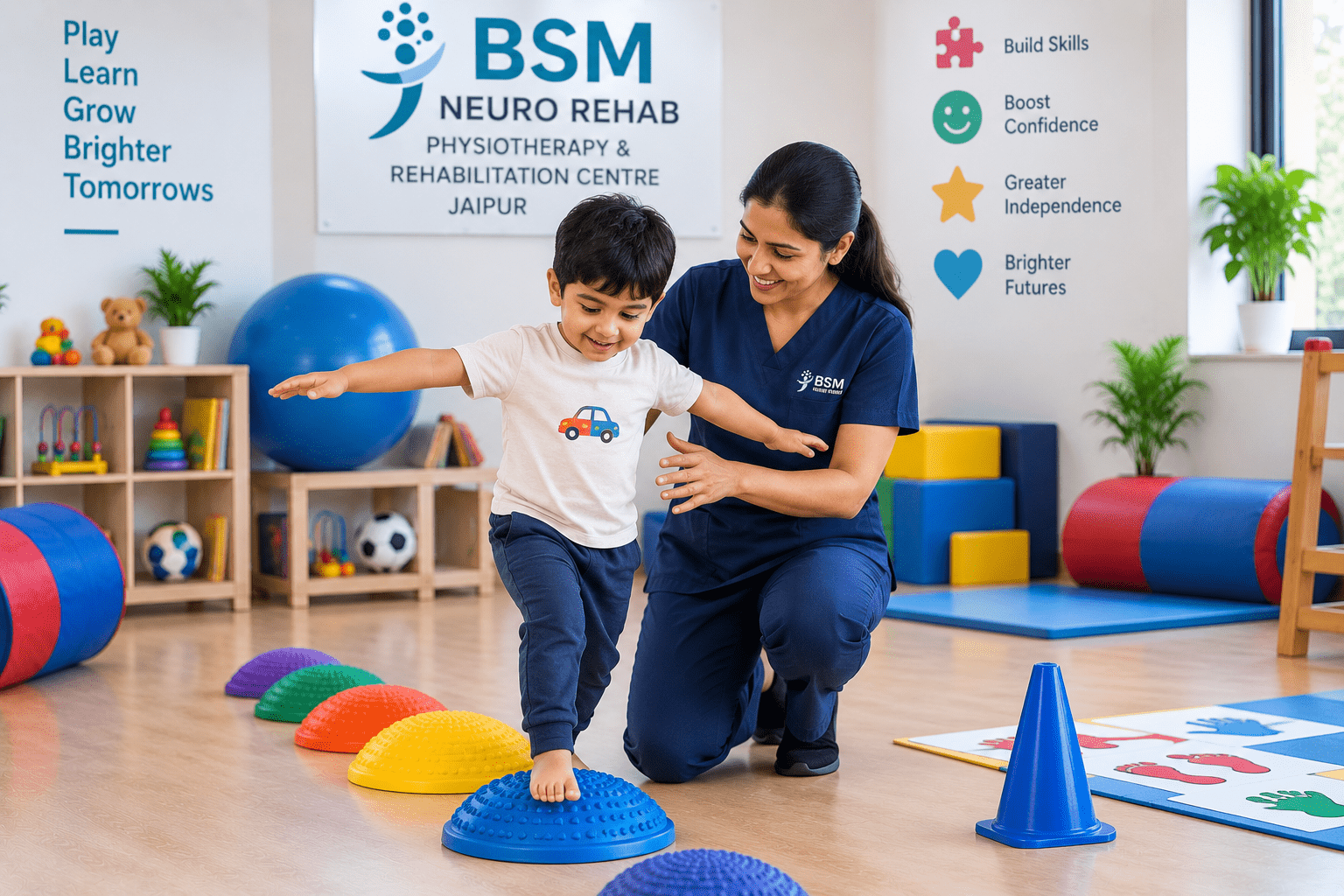
When these difficulties are identified, pediatric physiotherapy can support appropriate motor and functional goals.
Activities may involve balance, coordination, gross motor skills and movement-based play according to the child’s abilities.
Special Education and Learning Support
Children with autism can have very different learning profiles.
Individualized educational support may help children develop attention, participation, communication, cognitive and functional learning skills.
Breaking activities into manageable steps and adapting teaching strategies to the child’s learning style can make therapy and education more meaningful.
How BSM Supports Parents and Families
Autism support does not stop when the therapy session ends.
Parents and caregivers spend considerably more time with a child than therapists do, so practical family guidance can be valuable.
Depending on the child’s programme, families may receive suggestions for supporting communication, play, participation or functional activities during everyday routines.
This can help families understand the goals being worked on during therapy and how appropriate strategies can be incorporated naturally at home.
How Has BSM Helped Children with Autism?
The most meaningful progress in autism rehabilitation is often found in individual functional changes, rather than promises of a “cure.”
Depending on each child’s starting point and goals, therapy at BSM may work toward improvements such as communicating needs more effectively, participating in activities for longer periods, developing motor abilities, increasing independence in everyday tasks, or building interaction and learning skills.
Importantly, progress varies from child to child. BSM’s role is to assess individual needs, establish appropriate goals and provide structured professional support while involving families in the rehabilitation process.
If BSM has real documented patient success stories, this section is where I strongly recommend adding one. A genuine anonymized case story will make this blog much more trustworthy than generic marketing claims.